
713-229-8333

-

- Home
- Our Firm
- DWI
- First DWI
- Second DWI
- Third DWI
- Fourth DWI or More
- Felony DWI
- Commercial Vehicle DWI
- Motorcycle DWI
- Controlled Substance or Drug DWI
- Out of State Resident DWI
- College Student DWI
- Underage DUI
- DWI Defense for Licensed Professionals
- CPA Licenses
- Dental Licenses
- EMT Licenses
- Law Licenses
- Medical Licenses
- Mental Health Counselor Licenses
- Small Business
- Nursing Licenses
- Pharmacist Licenses
- Pilot Licenses
- Podiatrist Licenses
- Psychologist Licenses
- Real Estate Licenses
- SEC Securities Licenses
- Security Clearances
- Teaching Licenses
- Veterinarian Licenses
- Optometrist Licenses
- Collateral Consequences of DWI
- DWI Criminal Procedure
- ALR Hearing
- Open Container
- DWI Tests
- Boating While Intoxicated
- Criminal Defense
- Drug Crimes
- Drug Possession
- Drug Distribution
- Drug Conspiracy
- Drug Diversion
- Juvenile Drug Crimes
- Internet Drug Crimes
- Drug Crime Enhancements
- Drug Penalty Groups
- Drug Information
- Drug Crimes FAQ
- What Is Considered a Dangerous Drug in Texas?
- What Evidence Is Needed to Convict a Person of a Drug Crime in Texas?
- Is Possession of Marijuana a Crime in Texas?
- What Are the Consequences for Repeat Drug Offenders in Houston?
- Should I Plead Guilty to a Drug Crime Charge in Texas?
- What Is the Difference Between Federal and State Drug Crime Charges?
- Opioid Crimes FAQ
- Traffic Violations
- Assault Crimes
- Homicide Crimes
- Prostitution and Solicitation
- White Collar Crimes
- Theft
- Federal Crimes
- Federal Drug Charges
- Federal White Collar Crimes
- Immigration Crimes
- Federal Weapons Charges
- Obstruction of Justice
- Federal Crimes FAQ
- How Can an Attorney Help When Im Under Federal Investigation?
- What Happens if I Plead the Fifth in a Federal Crimes Case?
- Why Have I Been Accused of Obstruction of Justice?
- What Happens to Property That Has Been Forfeited and Seized by the Federal Government?
- What Should I Know About Federal Courts and the Federal Prison System in Texas?
- What Is a Currency Transaction Report?
- What Are Pre-Arrest and Arrest Warrants in Federal Crimes Cases?
- Other Crimes
- 3G Offenses
- Probation Violations
- Deferred Adjudication
- Expunctions
- Nondisclosures
- Defense Strategies
- Criminal Defense FAQ
- Drug Crimes
- Areas Served
- Houston Courts for DWI
- Harris County
- Baytown
- Bellaire
- Braeswood Place
- Cypress
- Deer Park
- East Downtown
- Friendswood
- Galleria
- Houston Heights
- Humble
- Jersey Village
- Katy
- Kingwood
- La Porte
- Memorial Villages
- Midtown
- Missouri City
- Montrose
- Pasadena
- Precinct 1
- Precinct 4
- Precinct 5
- Rice Military
- River Oaks
- Southside Place
- Spring
- Spring Valley
- Tanglewood
- Timbergrove/Lazybrook
- Tomball
- West University Place
- Westchase
- Austin County
- Bastrop County
- Brazoria County
- Colorado County
- Fayette County
- Fort Bend County
- Galveston County
- Grimes County
- Guadalupe County
- Lavaca County
- Leon County
- Liberty County
- Madison County
- Matagorda County
- Montgomery County
- Walker County
- Waller County
- Washington County
- Wharton County
- Media
- Blog
- Contact
“I couldn't ask for a better attorney, and office to work with.”-Satisfied Client
Refusal To Take a Breath Test During a DWI Stop in Texas
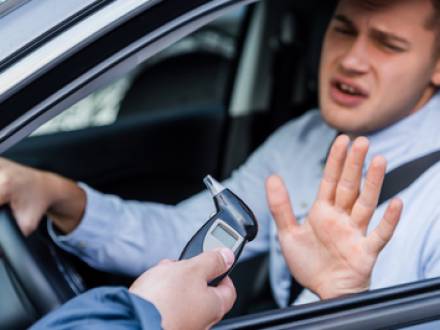 Breath tests are administered when a police officer suspects you are operating a vehicle, including a watercraft, under the influence of alcohol. Generally, these tests are given after a failed sobriety test or after the officer finds probable cause to believe that you are under the influence of alcohol illegally.
Sometimes, people in this situation refuse to take a breath test, and this is your right. However, it can carry certain consequences. If you have been charged with a DWI or related offense, seek legal assistance right away. The Houston DWI defense attorneys at Murphy & McKinney Law Firm, P.C. can help you understand your rights and build a strong defense.
What Are Texas Implied Consent Laws?
When you obtain a license in Texas, you commit to obey the rules of the road. Part of this responsibility is your implied consent (Texas Transportation Code § 724.011) to submit to a breath test if a law enforcement agent believes there is probable cause to detain you for driving while intoxicated. You are not required to provide information or evidence that can be used against you later in court. Thus, you have every right to refuse to take a breath test.
Previously, law enforcement agents in Texas were able to take a blood sample without a warrant, regardless of whether you refused a breath test. However, a U.S. Supreme Court decision ruled that taking breath and blood samples without consent and without a warrant is unconstitutional.
Police officers in Texas can no longer compel you to provide a breath sample without a valid search warrant, even in cases of suspected driving while intoxicated with a child in the car or other felony DWI-related offenses.
What Happens if You Refuse a Breath Test During a DWI Stop in Texas?
If an officer has probable cause, they can place you under arrest. They may request a breath test, but first, the officer must read and provide in writing a Statutory Warning, known as the DIC-24, that explains the legal consequences of refusing or failing a breath or blood test.
The officer will advise you in writing that a refusal to take the breath test can be submitted as evidence against you in court, and you will lose your driving privilege for a minimum of 180 days, or two years if you have an alcohol or drug-related enforcement contact within 10 years. The officer should also advise you that if you take a breath or blood test and your blood alcohol content level is above the legal limit, your license may also be revoked for 90 days. Once you have been properly provided the Statutory Warning, the officer can only then ask for a breath or blood test.
If you refuse a breath test, the first thing the officer will do is request your signature on a statement whereby you acknowledge that you were warned by the officer of the consequences for the breath test refusal, that you were asked to take a breath test, and that you refused. Then, the officer will take your license. In place of your driver's license, you will be given a Notice of Suspension, which also acts as a temporary driving permit, so that you can drive for 40 days.
The officer may contact a judge for a search warrant. The officer has the right to choose a breath or blood test. If you refuse a breath test, the officer will likely request a search warrant to take a blood sample.
Are There Exceptions to the Right To Refuse a Breath Test in Texas?
There is only one exception: when police have a warrant. When police have a warrant, they can legally compel you to give blood rather than compel you to perform a breath test.
Should You Refuse a Breath Test in Texas?
This question is asked a lot, and for good reason, but there is no simple answer. Before the widespread use of search warrants, the advice was simply to refuse a breath test. The use of search warrants has changed this advice.
Breath testing is inherently unreliable, and the test makes many assumptions. It is a one-size-fits-all approach that does not fit everyone. The science and algorithms behind breath testing are based on the law of averages. If you are above or below those averages, you will be forced to wear a shoe that is not your size when it comes to breath testing. Thus, a breath test can erroneously cause you to fail even if you are not legally intoxicated.
Reliability of Breath Tests
Breath tests are well known to have interferents that falsely inflate a breath test score. Breath testing does not generally need an expert for a competent lawyer to demonstrate a lack of accuracy and reliability. Blood testing can be more accurate and reliable if conducted correctly. However, there are many people involved in the blood testing chain of custody that can often lead to other problems and issues. Compared side by side, blood is more accurate, assuming all protocols are complied with.
What Do You Do After Refusing a Breath Test During a Texas DWI Stop?
If you refused a breath test, then there are two things you must do upon your release from police custody. First, find an experienced lawyer. Second, request a hearing within 15 days to challenge the suspension of your driver's license. If you retain an attorney in time, he or she can request the hearing for you, which works to your benefit in case you need to appeal the administrative hearing.
What Are the Consequences of Refusing a Breath Test During a TX DWI Stop?
Do not think that because you refused to take a breath test, there is all this evidence against you, and there is no point in hiring an attorney. That thinking would be a huge error. Consequences of a DWI can include long jail terms and steep fines, as well as collateral consequences that could be with you for the rest of your life, such as:
- Inability to possess certain professional licenses or security clearance
- Inability to obtain financial aid for college
- Inability to rent or lease at many real estate complexes
- Difficulty finding a good job due to background checks.
When the stakes are this high, you need an attorney to help you challenge the allegations.
How Can an Attorney Challenge a Breath Test Refusal at Trial?
An attorney will challenge evidence that you refused to take a breath test in the event the matter goes to court. The police may have a statement with your signature, but there is context that can be provided to help jurors understand the unique circumstances of your arrest.
For instance, you may not have known that you were refusing to submit to a breath test. A lot is going on during a traffic stop. You are nervous, the officer is asking a lot of questions, you have to walk unnaturally for your sobriety test, among many other things.
It can be confusing for someone being questioned by police for DWI. In addition, police are not always patient and may take your confusion as refusal.
Other circumstances that can be used to challenge a refusal if submitted as evidence include the following:
- The law enforcement agent did not explain to you the consequences of refusing to take a breath test.
- You tried to tell the law enforcement agent that you have a health condition that would likely create a false reading, but it went unheard.
- You attempted to request a blood or urine test, and the police officer mistook this request as a refusal.
Challenging your case is crucial to getting your life back.
What Happens at the Administrative Hearing for a License Suspension After a DWI Stop in Texas?
You have 15 days to request a hearing to challenge the suspension of your license. If the 15-day allowance expires and you have not yet requested your hearing, you forgo the right to one. If you do request the hearing in time, a hearing will be scheduled.
The prosecution must prove that you were operating your vehicle while illegally intoxicated and that you refused to submit a breath sample for testing. The standard of proof is lower at an administrative hearing than it is at a criminal trial – only a preponderance of the evidence must indicate you were driving while intoxicated, rather than evidence that proves it beyond a reasonable doubt.
If you cannot successfully defend yourself, your driver's license will remain suspended for 180 days for first refusals. If the refusal is your second or subsequent refusal within 10 years, your driver's license could be suspended for two years.
Contact Our Houston DWI Defense Attorneys Today
At Murphy & McKinney Law Firm, P.C., we devote our resources and capabilities to defend our clients' rights. We have decades of proven experience and a reputation earned in the courtroom for successful results. Attorney Doug Murphy is a Board-certified criminal defense lawyer and a Board-certified DWI lawyer who not only fights on behalf of his clients but also constantly gives back to the legal community to teach other attorneys how to do the same.
We will help you protect your rights and challenge your DWI case in court. Contact our Houston DWI defense lawyers online or at 713-229-8333 today to discuss the circumstances of your case.


 Office Location
Murphy & McKinney Law Firm, P.C.
902 Heights Blvd., Houston, TX 77008
P 713-229-8333
F 713-583-0205
Our firm is located in Houston, and we provide representation for people in the surrounding cities and counties, including Cypress, Katy, Spring, Pasadena, La Porte, Deer Park, Friendswood, Baytown, Harris County, Bastrop County, Brazoria County, Fort Bend County, Galveston County, Guadalupe County, Liberty County, Montgomery County, Walker County, Waller County, and Wharton County. We also serve clients throughout the state of Texas.
Results listed are not a guarantee or indication of future case results.