
713-229-8333

-

- Home
- Our Firm
- DWI
- First DWI
- Second DWI
- Third DWI
- Fourth DWI or More
- Felony DWI
- Commercial Vehicle DWI
- Motorcycle DWI
- Controlled Substance or Drug DWI
- Out of State Resident DWI
- College Student DWI
- Underage DUI
- DWI Defense for Licensed Professionals
- CPA Licenses
- Dental Licenses
- EMT Licenses
- Law Licenses
- Medical Licenses
- Mental Health Counselor Licenses
- Small Business
- Nursing Licenses
- Pharmacist Licenses
- Pilot Licenses
- Podiatrist Licenses
- Psychologist Licenses
- Real Estate Licenses
- SEC Securities Licenses
- Security Clearances
- Teaching Licenses
- Veterinarian Licenses
- Optometrist Licenses
- Collateral Consequences of DWI
- DWI Criminal Procedure
- ALR Hearing
- Open Container
- DWI Tests
- Boating While Intoxicated
- Criminal Defense
- Drug Crimes
- Drug Possession
- Drug Distribution
- Drug Conspiracy
- Drug Diversion
- Juvenile Drug Crimes
- Internet Drug Crimes
- Drug Crime Enhancements
- Drug Penalty Groups
- Drug Information
- Drug Crimes FAQ
- What Is Considered a Dangerous Drug in Texas?
- What Evidence Is Needed to Convict a Person of a Drug Crime in Texas?
- Is Possession of Marijuana a Crime in Texas?
- What Are the Consequences for Repeat Drug Offenders in Houston?
- Should I Plead Guilty to a Drug Crime Charge in Texas?
- What Is the Difference Between Federal and State Drug Crime Charges?
- Opioid Crimes FAQ
- Traffic Violations
- Assault Crimes
- Homicide Crimes
- Prostitution and Solicitation
- White Collar Crimes
- Theft
- Federal Crimes
- Federal Drug Charges
- Federal White Collar Crimes
- Immigration Crimes
- Federal Weapons Charges
- Obstruction of Justice
- Federal Crimes FAQ
- How Can an Attorney Help When Im Under Federal Investigation?
- What Happens if I Plead the Fifth in a Federal Crimes Case?
- Why Have I Been Accused of Obstruction of Justice?
- What Happens to Property That Has Been Forfeited and Seized by the Federal Government?
- What Should I Know About Federal Courts and the Federal Prison System in Texas?
- What Is a Currency Transaction Report?
- What Are Pre-Arrest and Arrest Warrants in Federal Crimes Cases?
- Other Crimes
- 3G Offenses
- Probation Violations
- Deferred Adjudication
- Expunctions
- Nondisclosures
- Defense Strategies
- Criminal Defense FAQ
- Drug Crimes
- Areas Served
- Houston Courts for DWI
- Harris County
- Baytown
- Bellaire
- Braeswood Place
- Cypress
- Deer Park
- East Downtown
- Friendswood
- Galleria
- Houston Heights
- Humble
- Jersey Village
- Katy
- Kingwood
- La Porte
- Memorial Villages
- Midtown
- Missouri City
- Montrose
- Pasadena
- Precinct 1
- Precinct 4
- Precinct 5
- Rice Military
- River Oaks
- Southside Place
- Spring
- Spring Valley
- Tanglewood
- Timbergrove/Lazybrook
- Tomball
- West University Place
- Westchase
- Austin County
- Bastrop County
- Brazoria County
- Colorado County
- Fayette County
- Fort Bend County
- Galveston County
- Grimes County
- Guadalupe County
- Lavaca County
- Leon County
- Liberty County
- Madison County
- Matagorda County
- Montgomery County
- Walker County
- Waller County
- Washington County
- Wharton County
- Media
- Blog
- Contact
“Constant communication, swift resolution, ideal result :)”-Satisfied Client
Recent Blog Posts
Implied Consent to DWI Blood Tests and Other Searches
 With drunk driving continuing to be a national issue, advocacy groups have pushed legislatures to institute new laws that would both increase convictions and penalties for drunk driving. One example of these laws is an implied consent law. These provisions allow police to take a sample of the driver's blood or breath, even if the driver objects, in order to determine if a driver's blood alcohol concentration meets or exceeds the relevant legal limit. Texas, with its aggressive policing of driving while intoxicated, is one of the states with an implied consent law. If you are facing a DWI charge in 2026 and have questions about your rights, the Houston DWI defense lawyers at Murphy & McKinney Law Firm, P.C. are here to help.
The basic premise of these laws is that driving is not a right but a privilege granted to you by the state and subject to regulation and limitation. Therefore, if someone obtained a driver's license, they had automatically given the state implied consent to give a blood or breath test anytime they were driving, and the police had probable cause to pull them over.
How Do I Get a Solicitation Charge Dismissed in Texas?
 Getting a solicitation charge dismissed in Texas is possible, but it takes a strong defense built on the specific facts of your case. These charges carry severe consequences, including jail time, fines, and in some cases, sex offender registration. But keep in mind that you will have the chance to defend yourself. At Murphy & McKinney Law Firm, P.C., we can help you fight for a dismissal or a reduction in charges. If you are facing a solicitation charge in 2026, our Houston criminal defense lawyers look at every detail of your case to build the strongest possible defense strategy.
What Is Solicitation of Prostitution Under Texas Law?
Solicitation of prostitution is defined under Texas Penal Code Section 43.021. A person commits this offense by knowingly offering or agreeing to pay another person for sexual conduct. The offense can be charged even if no money changes hands and no sexual conduct actually occurs.
Witnesses in a DWI Trial
 When faced with the prospect of going to trial in a Texas DWI matter, it isn't easy to know where to start. The process is confusing. The consequences are severe, and most people do not have a lawyer on call that they can trust.
Because of this, people end up pleading guilty during the initial phases of a DWI case even though they may have legitimate defenses or concerns about violations of their rights. Although these defendants may not realize it at the time, these guilty pleas can cause ripple effects in every area of a person's life for years to come. Don't let that be you.
If you have been charged with a DWI in the Houston metropolitan area, the Houston DWI defense lawyers at Murphy & McKinney Law Firm, P.C. can help. Douglas Murphy is a board-certified expert in DWI defense and criminal law and one of Houston's best DWI defense attorneys. His law firm can help you assess the strengths and weaknesses of your case and assist you in making the best decision for you at every stage of the process.
Avoiding Arrest and Protecting Your Rights During the 2026 World Cup in Texas
 The 2026 FIFA World Cup is underway, and Texas is hosting some of the biggest matches of the tournament. Hundreds of thousands of fans from around the world are filling the streets and stadiums, and with that energy comes a significantly heavier law enforcement presence. Knowing your rights and understanding what to avoid can be the difference between an unforgettable experience and a serious legal problem. If you find yourself facing criminal charges during the World Cup, the Houston criminal defense lawyers at Murphy & McKinney Law Firm, P.C. are ready to help.
What Types of Arrests Are Most Common at Large Sporting Events?
Law enforcement agencies prepare heavily for major events like the World Cup. Knowing what draws police attention helps you stay out of trouble.
DWI and DUI Charges
Under Texas Penal Code Section 49.04, it is illegal to operate a motor vehicle in a public place while intoxicated. Intoxicated means either having a blood alcohol concentration of 0.08 or higher or not having the normal use of your mental or physical faculties due to alcohol or drugs.
Can You Legally Use Force to Protect Your Property in Texas?
 Texas law allows you to use force to protect your property in certain situations, but the rules are more specific than most people think. Texas has detailed laws governing property rights, but the ability to use force to protect property is not unlimited. It can be confusing trying to understand where the line falls between a legal use of force and a criminal charge. If you are facing charges related to defending your property, the Houston criminal defense lawyers at Murphy & McKinney Law Firm, P.C. can help you understand whether your actions were legally justified and what you can do to fight the charges.
What Does Texas Law Say About Using Force to Protect Property?
Texas Penal Code Section 9.41 gives you the right to use force to protect your property. You can use force when you reasonably believe it is immediately necessary to stop someone from unlawfully taking, damaging, or destroying what belongs to you. You can also use force to stop someone from tampering with your property or to get it back right after it was taken.
Houston DWI & What the 12-Step DRE Means
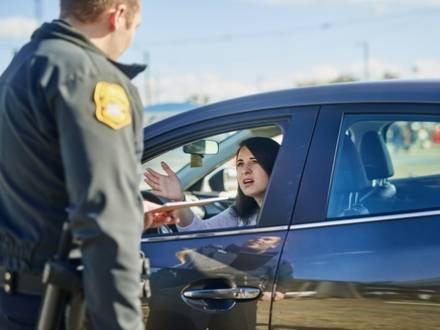 For most people, the words driving while intoxicated conjure visions of a person inebriated with alcohol behind the wheel of a car. However, there are countless substances capable of intoxication. From prescription drugs to illegal narcotics, these substances present a challenge to law enforcement because all of their training is generally only to determine alcohol impairment.
Unlike the amount of alcohol in the bloodstream, the volume of these substances in the bloodstream cannot be objectively measured because there have not been objectively defined limits for drugs in all persons. The series of tests and observations law enforcement created to use to identify drug intoxication is known as Drug Recognition Expert (DRE) protocol. The DRE protocol is a hocus pocus police tool that has the greatest potential to wrongfully convict a sober and innocent person who is being therapeutically treated by their physician.If you are facing a drug-related DWI charge in 2026, the Houston DWI defense lawyers at our firm are ready to help you challenge this flawed process.
Can You Be Charged With Assaulting a Police Officer if You Didn’t Hurt Them?
 You can be charged with assaulting a police officer in Texas even if the officer was not seriously hurt. However, the more serious felony charge of assault on a public servant usually requires the state to prove bodily injury, along with proof that the officer was lawfully performing official duties. Under Texas law, physical injury is not required for an assault charge to stick. Some assault charges can be based on intentional physical contact that is considered offensive or provocative, or even on a threat alone. The consequences of a conviction can be life-changing. If you are facing this kind of charge in 2026, the Houston criminal defense lawyers at Murphy & McKinney Law Firm, P.C. can help you understand exactly what the state has to prove and what options you have.
What Does Texas Law Say About Assaulting a Police Officer?
Texas Penal Code Section 22.01 defines assault in three ways: physically hurting someone on purpose or by being reckless, threatening someone with physical harm, or making physical contact with someone in a way that is offensive or provocative.
Defending Against Accusations of Texting While Driving After a Crash
 Accusations of texting while driving after a crash are common in Texas. In the immediate chaos of an accident, it is easy for assumptions to form quickly. Once someone points a finger at your phone, the whole narrative of what happened can shift against you. The good news is that an accusation is not proof, and there are real ways to defend yourself. If you are facing a texting while driving citation or criminal charge, our Houston traffic violations defense lawyers can review your case and help you fight back.
Under Texas Transportation Code Section 545.4251, it is illegal to read, write, or send an electronic message on a wireless device while operating a vehicle. A basic first offense carries a fine between $25 and $99. But when a crash is involved, the stakes rise significantly. If someone was seriously injured or killed, you could be facing a Class A misdemeanor with fines up to $4,000 and up to one year in jail under Texas Transportation Code Section 545.4251(c) .
How To Prepare for Your Harris County DWI Trial
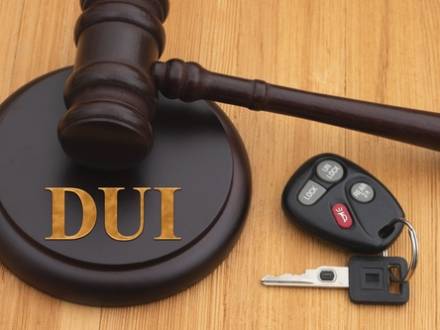 You have made the hard but right decision to fight your DWI charge. After a period of pretrial negotiations, motions, and hearings, a trial is just around the corner. Like most things in life, preparing for the trial is your first and most effective form of defense. Everything during that trial will revolve around you, so everything you do must be prepared and thoughtful. The trial is your means to defend you. It is your means to an acquittal, when possible. It is your means of safeguarding your future and everything that matters to you.
Your attorney, the person who will be guiding you through the process, is the one who will help you prepare. As such, your attorney is the key to a successful trial. If you are facing a DWI charge in Harris County, connecting with Houston DWI defense attorneys early in the process is one of the most important steps you can take.
Who Qualifies for Drug Diversion Programs in Texas?
 If you are facing a drug charge in Texas, you may not have to go through the full criminal court process. Drug diversion programs offer a different path. They let some people avoid a conviction, complete a treatment or education program, and move on with their lives. Whether you qualify depends on the type of charge, your criminal history, and which county is handling your case. If you are hoping to avoid a drug conviction in 2026, our Houston criminal defense lawyers can help you find out whether a diversion program is an option for you.
What Is a Drug Diversion Program?
Drug diversion programs are an alternative to going through a full criminal trial. Instead of court, eligible people complete a set of requirements. These usually include drug treatment, counseling, community service, regular drug testing, and check-ins with a supervisor. If you finish the program successfully, the charges can be dismissed or reduced. That could mean no conviction on your record.


 Office Location
Murphy & McKinney Law Firm, P.C.
902 Heights Blvd., Houston, TX 77008
P 713-229-8333
F 713-583-0205
Our firm is located in Houston, and we provide representation for people in the surrounding cities and counties, including Cypress, Katy, Spring, Pasadena, La Porte, Deer Park, Friendswood, Baytown, Harris County, Bastrop County, Brazoria County, Fort Bend County, Galveston County, Guadalupe County, Liberty County, Montgomery County, Walker County, Waller County, and Wharton County. We also serve clients throughout the state of Texas.
Results listed are not a guarantee or indication of future case results.